Free Shipping on Olive Oils & Orders $99+ — Low $10 Flat-Rate Shipping

Olive Oil, tell me what you’re made of, and…

Tell me what you're made of, when, where, and how, and I'll tell you what you're like
When it comes to extra virgin olive oil, there are many factors that determine its flavor. If we want to get a head start and know whether we’ll like an oil or not before tasting it—by understanding some or all of the characteristics that go into its production—we can get a better idea of whether it will suit our tastes before buying it. In this article, I’ll discuss the factors and characteristics of extra virgin olive oil that influence its flavor.
Olive Variety
The cultivar (or variety) is the fundamental genetic factor that determines the organoleptic profile of extra virgin olive oil (EVOO). Each variety contains a unique combination of fatty acids, volatile compounds (responsible for the aromas perceived through the nose and retronasal passage), and polyphenols (responsible for the bitterness and pungency in the mouth).
While factors such as climate or ripeness modify the intensity, the variety sets the “baseline personality”—defining whether an oil will be predominantly sweet and almond-like, or conversely, intensely herbaceous, bitter, and pungent.
Flavor Profile of the varieties we like best
1. Picuda
Main Origin: Córdoba (Andalusia, Spain).
Flavor Profile: It is a very balanced and complex variety, characterized by a smooth entry in the mouth with a marked fruitiness.
Aromatic Nuances: Clear notes of ripe fruits (such as banana and ripe apple) stand out, accompanied by subtle touches of fresh almond and exotic hints of green banana or green almond (alloza). Its bitterness and pungency are light and medium-low in intensity, making it very pleasant and well-rounded on the palate.
2. Hojiblanca
Main Origin: Seville, Córdoba, and Málaga (Andalusia, Spain).
Flavor Profile: It stands out for its great freshness and vegetal complexity. It has a fluid entry that evolves into a very characteristic bitterness and pungency of medium intensity, which usually appear at the end of the tasting with a slightly astringent touch in the throat.
Aromatic Nuances: Aromas of freshly cut grass, olive leaf, artichoke, and touches of green fruit with an almond hint predominate. It is a very lively oil.
3. Arbequina
Main Origin: Catalonia (Spain), though widely distributed globally.
Flavor Profile: It is the quintessential friendly variety. It is characterized by being a sweet, fluid oil with a very delicate texture in the mouth. Both bitterness and pungency are almost imperceptible or very faint, making it a favorite for those starting out in EVOO consumption or who prefer mild flavors.
Aromatic Nuances: Soft fruity notes predominate, clearly highlighting apple, ripe banana, and sweet almond. Its aroma is reminiscent of fresh orchard fruits.
4. Picual
Main Origin: Jaén (Andalusia, Spain) and the most widely cultivated variety in the world.
Flavor Profile: It is the exact opposite of Arbequina: an oil with a lot of personality, robust, dense, and of great stability. It presents well-marked, intense, and persistent bitterness and pungency, which are a direct reflection of its extremely high content of natural antioxidants (polyphenols).
Aromatic Nuances: Intense vegetal notes of fig tree (fig leaf), green tomato, and fresh grass stand out. In the mouth, it is complex with an unmistakable character that lingers for a long time.
Agronomic and Production Factors
These environmental and procedural factors act alongside the olive variety to shape the final organoleptic profile of the extra virgin olive oil:
How “When”, “Where”, and “How” Affect the Flavor
1. When: Degree of Ripeness (Harvest Time)
Flavor Impact: The harvesting moment dramatically alters the flavor profile:
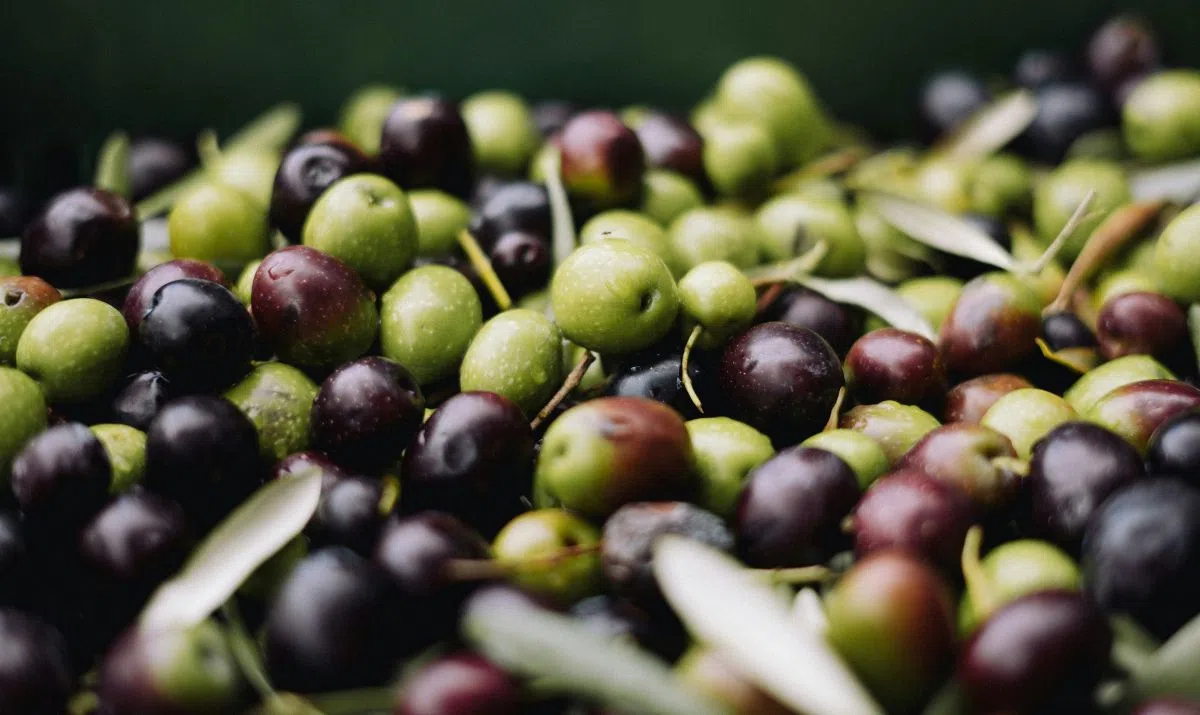
Early Harvest (Green Olives): Produces oils with higher intensity, bitterness, pungency, and dominant green notes (fresh grass, green leaves, green tomato).
Late Harvest (Ripe Olives): Yields smoother, sweeter, and flatter oils with notes of nuts, ripe apple, or sweet fruit.
2. Where: Terroir (Soil and Climate)
Flavor Impact: Geological characteristics, soil nutrients, hours of sun exposure, and altitude directly influence the concentration of aromatic compounds in the fruit.
Climate and Sun: Higher solar radiation often increases antioxidant production, leading to more robust oils.
Soil: Mineral composition and water availability subtly shape the aromatic complexity and structure in the mouth.
3. How: Harvesting and Extraction Methods
Flavor Impact: Human intervention and processing techniques are vital for preserving purity:
Harvesting Method: Harvesting directly from the tree (en vuelo) yields fresh, clean flavors, whereas olives gathered from the ground can suffer unwanted fermentations that ruin the taste.
Extraction Process: A short time between harvest and milling is essential. Furthermore, cold extraction (keeping the olive paste below 27°C) preserves delicate aromas and volatile compounds, preventing thermal degradation.
This world really is fascinating. Ultimately, origin, quality, and craftsmanship are the most decisive factors, and Spain is one of the countries with the best conditions surrounding its products.
I hope you enjoyed the article. Be sure to let us know what you think in the comments.

Jose A Caro
From La Luisiana, living in Écija, Sevilla, Spain. Passionate about family, business, travel, sports, music, and food. I’ve been working in international trade and the U.S. market for 15 years, and I’m enjoying everything I love more and more every day!