Free Shipping on Olive Oils & Orders $99+ — Low $10 Flat-Rate Shipping

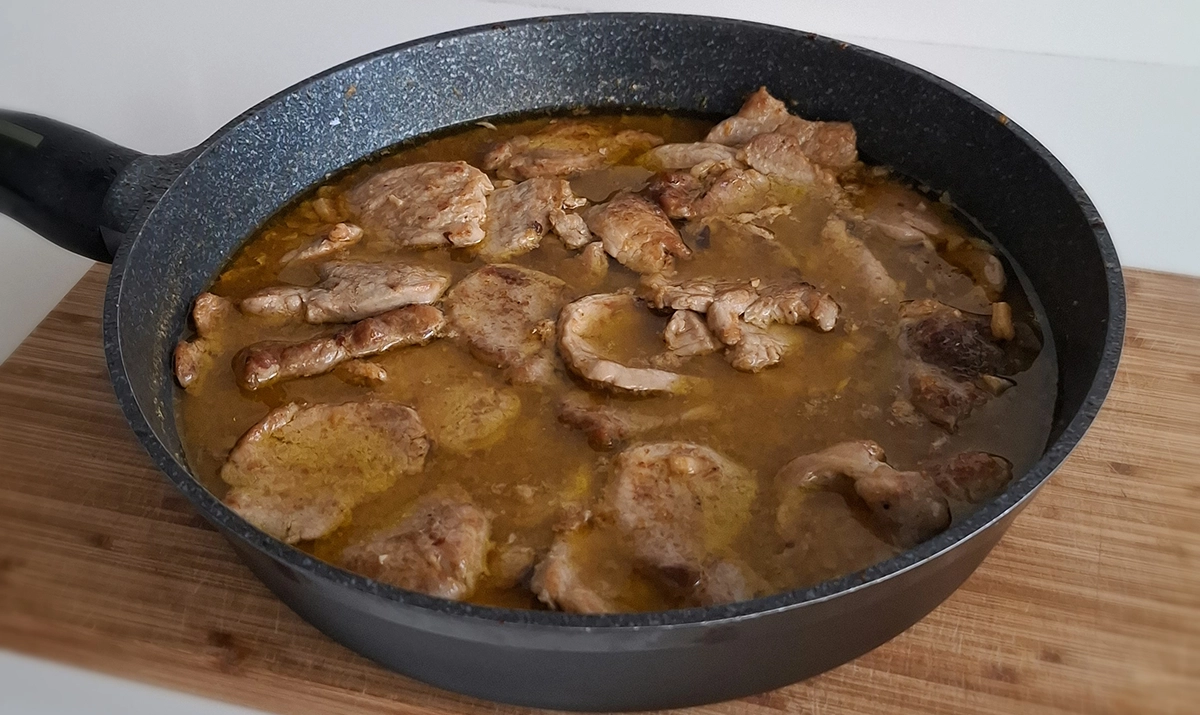
Solomillo al Jerez Recipe | You’re sure to be a hit.

Not a master chef? Surprise the home foodie with a gourmet solomillo al jerez they'll never forget.
This recipe is a true southern Spanish classic found in every local bar and festival, yet it has the power to amaze even the most refined palates. It will even leave the resident foodie chef guessing your secret ingredient—convinced you’re using something utterly elusive that ordinary mortals could never figure out. It’s living proof that even the most popular traditional dishes can still deliver a gourmet surprise.
And that is precisely what happens at home: almost every time we have guests or a celebration, someone drops a «¡illo, qué bueno está esto! ¿Qué le has puesto?» (the quintessential Andalusian way of saying: “Mate, this is incredible, what’s your secret?”).
And in a recipe this simple with so few ingredients, there isn’t just one secret—it’s a combination of things. Specific ingredients (starting with the right pork tenderloin with a built-in trick, moving on to the best olive oil, and finishing with the finest Manzanilla white wine from Cádiz that you’d happily drink on its own—which technically isn’t Sherry, even though the recipe is called Solomillo al Jerez), plus a touch of high-end culinary technique and a few small tips. Don’t worry, it’s all completely simple—but whoever tries it will be utterly amazed, guaranteed!
Let’s talk about portions… Usually, recipes are designed for 4 people, but in our house, there are a lot of us, and everyone loves this dish so much that whenever I make it, I cook enough for at least two meals! I measure things by whole pork tenderloins; every time I cook this, I use 4 of them so we can eat twice (there are 5 of us at home). For this recipe post, I’m going to scale it down to 2 pork tenderloins, which will easily feed 4 to 6 people, depending on everyone’s appetite and the side dish. Speaking of sides, our absolute favorite is homemade french fries fried in the best extra virgin olive oil—and if you can track down «patata agria» (Agria potatoes), they are hands down the absolute best choice for frying!
Let’s get started with the ingredients! Keep in mind that the first tips are listed in the ingredients section!
Ingredients (For 4-6 Servings)
- 2 pork tenderloins (dos solomillos de cerdo)
- Extra Virgin Olive Oil (EVOO) (Aceite de Oliva Virgen Extra)
- 1 whole head of garlic (1 cabeza de ajo entera)
- 1 cayenne pepper (1 cayena)
- 1 generous glass of Manzanilla wine (can be substituted with Fino, like Tio Pepe, or a dry white wine) (1 vaso generoso de vino manzanilla (sustituible por fino fino (tio pepe) o vino blanco seco))
- Freshly ground black pepper (pimienta negra recién molida)
- Coarse Salt (sal gruesa)
For accompaniment
- 1 kg of Agria potatoes (1 kg de patata agria)
- Extra Virgin Olive Oil (EVOO) (aceite de oliva virgen extra)
- Coarse salt (sal gruesa)
- Fine salt (sal fina)
Pro-tips on the ingredients:
I usually buy the pork tenderloins frozen, as the ones I get come with a light saltwater brine (marinada) that makes them unbelievably tender. If you can’t find them like that and buy them fresh, try freezing them before cooking—or even better, let them sit in salted water for a couple of hours before freezing them, and you won’t regret it! Regarding the meat, you can use regular pork or Ibérico. Honestly, I don’t think it needs to be Ibérico for this specific recipe, but if you love it, go right ahead and use it!
A note on the olive oil: I actually use two different extra virgin olive oils for this recipe. First, I use an EVOO to sear the pork medallions—in this case, I go with Almazaras de la Subbética Selección (D.O.P. Priego de Córdoba). Then, I use Parqueoliva Serie Oro at a lower temperature to gently confit the garlic, which is already giving away one of my big secrets for this recipe!
Now that we have the ingredients and this little collection of tips and advice, let’s move on to the step-by-step instructions.
Step 1.
Confiting the Garlic. Peel the garlic cloves, slice them first, and then give them a second chop until you have small pieces. In a medium-sized skillet, add 250 ml of a top-quality, award-winning extra virgin olive oil—such as Parqueoliva Serie Oro, one of the best oils in the world.
Cook the garlic over very low heat (or at around 60–65°C / 140–149°F if you’re using a thermometer. On my induction cooktop, which goes up to 9, I set it to 2). Break a cayenne pepper in half, add it to the oil along with the minced garlic, and let it slowly confit for about an hour while we move on to the next step.
Step 2.
Cutting and Searing the Tenderloins. If using frozen tenderloins, I usually take them out a little beforehand. Just before they finish thawing completely, I trim off any excess fat—this is the ideal point to cut them into medallions about one finger thick.
Heat a grill pan or skillet over high heat. Using Almazaras de la Subbética extra virgin olive oil, sear the medallions in batches so they develop a gorgeous golden crust without burning, then set them aside. As you go, season each batch generously with freshly ground black pepper and a pinch of salt.
Step 3.
Bringing the Tenderloin and Confited Garlic Together. Once all the medallions are beautifully browned, seasoned with salt, and given a generous crack of freshly ground black pepper, it’s time to bring everything together.
In a large skillet—ideally the same one where you seared the meat—set the heat to high, add the golden pork medallions, and immediately pour in the confited garlic along with its infused oil and that subtle kick from the cayenne pepper. Give it a couple of quick tosses, letting it cook for just a couple of minutes while keeping a close eye so the garlic doesn’t burn.
Now, crank the heat up high and pour in the wine, letting it bubble away for 2 minutes. Right after, add the exact same amount of water as the wine you just poured in.
Step 4.
Simmering and Preparing the Side Dish:
Once you’ve added the water and let it come to a rolling boil for a couple of minutes, lower the heat to medium. This gives us just enough time to prep our side dish, as the recipe will need another 30 to 45 minutes of gentle, low-heat simmering. And no, I haven’t forgotten about the salt—the seasoning we added to the pork medallions while searing them is plenty!
As for the potatoes, keep it simple: cut them into one-finger-thick batons, rinse them to remove the excess starch, and fry them at 160°C (320°F) until they float. Take them out, let them rest for a couple of minutes, season with fine salt, and they’re ready to serve.
At home, this is an absolute favorite—it never fails. Whenever we have guests over for parties or birthdays, everyone asks for the pork tenderloin. If you follow these steps… there’s a very good chance the exact same thing will happen to you, and that you’ll truly enjoy this classic dish from Andalusia, from Spain, from my homeland.

Jose A Caro
From La Luisiana, living in Écija, Sevilla, Spain. Passionate about family, business, travel, sports, music, and food. I’ve been working in international trade and the U.S. market for 15 years, and I’m enjoying everything I love more and more every day!